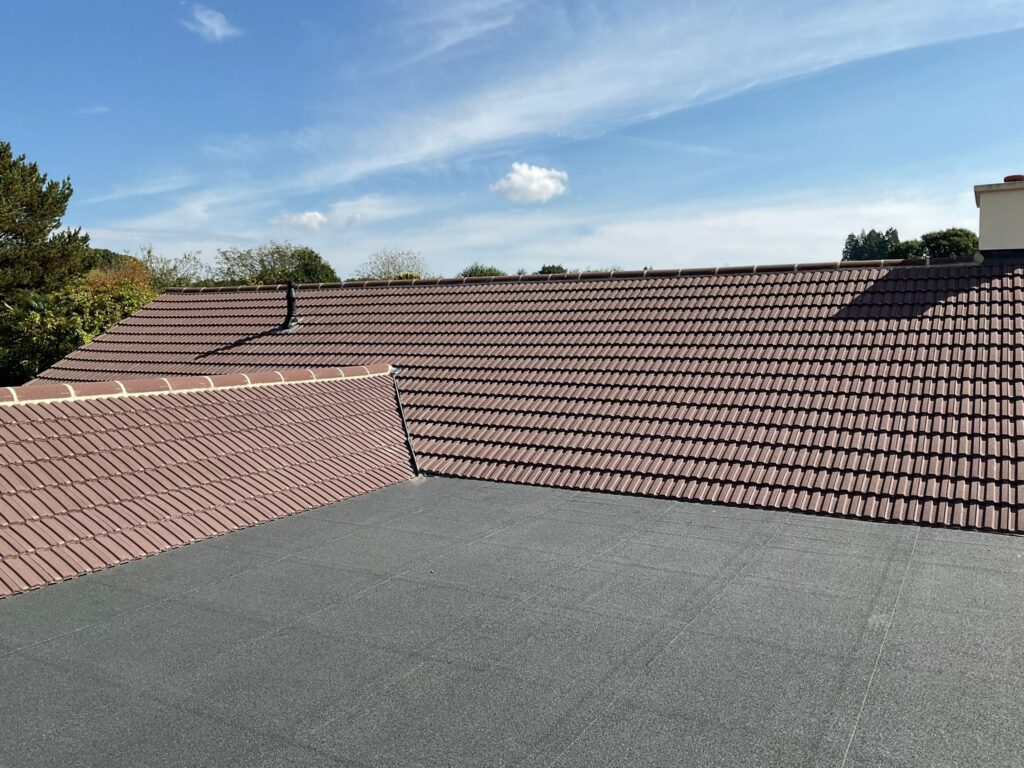
Roof tiles form the primary weather-resistant covering of a pitched roof. Although many tiles remain serviceable for a long time, age, repeated weather exposure and material deterioration can eventually affect their ability to protect the structure beneath them.
Replacing old roof tiles can improve weather resistance, appearance and overall roof reliability. However, replacement should be based on a professional assessment rather than age alone. For homeowners in Priory Vale, Wiltshire, understanding the condition of the complete roofing system is essential before deciding whether new tiles are appropriate.
How New Roof Tiles Can Improve an Older Roof
Tile replacement offers the greatest benefit when deterioration is widespread or when the existing covering can no longer be repaired reliably. The work should also address the underlay, battens, fixings and roof junctions rather than treating the tiles as an isolated surface.
Improved Protection Against Water Ingress
Cracked, porous or badly weathered tiles may allow moisture to reach the underlay. If numerous tiles are affected, replacing them individually can become less dependable as surrounding units continue to deteriorate.
A new tile covering creates a consistent surface with correctly formed overlaps and joints. When installed with suitable underlay and flashing, this helps rainwater move safely towards the eaves and drainage system.
More Secure Tile Fixing
Older roof tiles may begin to slip even when they are not visibly broken. Corroded nails, deteriorated battens or weakened tile nibs can reduce their stability.
Replacing the covering allows the fixing system to be renewed. New battens, nails and clips can be selected to suit the tiles and roof design, helping the covering remain correctly positioned during changing weather.
The Opportunity to Replace Worn Underlay
Underlay provides secondary protection beneath roof tiles. Older materials can become brittle, torn or unable to direct moisture effectively towards the eaves.
Because the underlay is concealed, it cannot usually be renewed properly without removing the tile covering. Replacing old tiles therefore provides an opportunity to install new underlay and correct damaged or poorly detailed sections beneath the surface.
Damaged Battens Can Be Addressed
Battens support the tiles and maintain consistent spacing between courses. Moisture exposure or age can cause individual battens to weaken, particularly where leaks have persisted.
Once the old tiles are removed, the battens can be inspected across the complete roof. Defective sections can then be replaced before the new covering is installed, creating a more reliable supporting system.
More Consistent Roof Performance
An older roof may contain tiles from several periods of repair. Differences in size, profile or weathering can produce uneven joints and inconsistent coverage.
A new, compatible tile system provides uniform dimensions and predictable overlaps. This improves the consistency of the roof surface and reduces the need to adapt unsuitable replacement tiles into older sections.
Better Protection at Roof Junctions
Chimneys, valleys, hips, ridges and abutments are vulnerable because several materials meet in these areas. Old tiles may have been cut, displaced or repeatedly repaired around these details.
Replacing the covering allows junctions to be reconstructed as part of the complete roof system. Flashing, valley materials and ridge or hip details can be assessed and renewed where necessary.
Improved Drainage Across the Roof
Correctly aligned tiles create clear routes for water to travel down the roof. Distorted, slipped or uneven coverings can interrupt this flow and direct moisture towards joints or vulnerable areas.
New tiles installed to the correct gauge and overlap help create a more orderly drainage surface. Valleys, eaves and gutters should also be checked so that water can leave the roof efficiently.
A Cleaner and More Uniform Appearance
Extensive weathering can leave a roof looking uneven, particularly where replacement tiles do not match the original covering. Surface erosion, staining and repeated repairs may also affect the roof’s overall appearance.
New tiles provide a consistent colour, profile and alignment. The chosen material should complement the property while remaining technically suitable for its roof pitch, structure and exposure.
Reduced Reliance on Repeated Repairs
Local repairs remain appropriate when most of the roof is sound. However, continuing to replace individual tiles may become less effective when deterioration is widespread.
A complete tile replacement can address the roof as one connected system rather than treating each new defect separately. This is particularly valuable when the tiles, fixings, battens and underlay are all showing signs of age.
Ventilation Can Be Reviewed
Roof replacement provides an opportunity to assess how moisture is managed within the roof space. Inadequate airflow can contribute to condensation on cold surfaces, even when the external covering is watertight.
Suitable ventilation components can be incorporated into the new system where required. This helps manage internal moisture while maintaining weather protection.
The Roof Can Be Inspected More Thoroughly
Removing the old tiles exposes parts of the roof that are normally concealed. This allows the contractor to inspect the underlay, battens and accessible structural timbers for staining, decay or movement.
Identifying these issues before installing the new covering helps prevent existing defects from being hidden beneath new materials.
When Tile Replacement May Be Appropriate
A professional assessment may recommend replacing old roof tiles when:
- Cracking or surface deterioration is widespread
- Tiles have become brittle or unstable
- Slippage occurs repeatedly in different areas
- Repairs are becoming increasingly frequent
- The underlay and battens also require renewal
- Compatible replacement tiles are difficult to integrate
- Several roof junctions need extensive attention
If only a small number of tiles are damaged and the remaining roof is sound, targeted repairs may still be the more appropriate approach.
Why Professional Installation Matters
The benefits of new roof tiles depend on correct installation. Tile selection must account for roof pitch, structural capacity, exposure and design. Batten spacing, overlap and fixing methods must also suit the chosen product.
Professional roofers assess these factors together, ensuring that the new tiles form part of a complete weather-resistant system rather than serving as a cosmetic surface alone.
Conclusion
Replacing old roof tiles can improve weather protection, fixing security, drainage and appearance while providing access to deteriorated underlay and battens. It can also reduce reliance on repeated repairs where the existing covering has become widely worn.
If you are concerned about old roof tiles at your property in Priory Vale, Wiltshire, contact LJ Roofing Priory Vale to arrange a professional assessment. The team can determine whether local repairs remain suitable or whether a new tile covering would provide a more reliable solution.
Call us on: 01793 569 593
Click here to find out more about LJ Roofing Priory Vale
Click here to complete our contact form and see how we can help with your roofing needs.