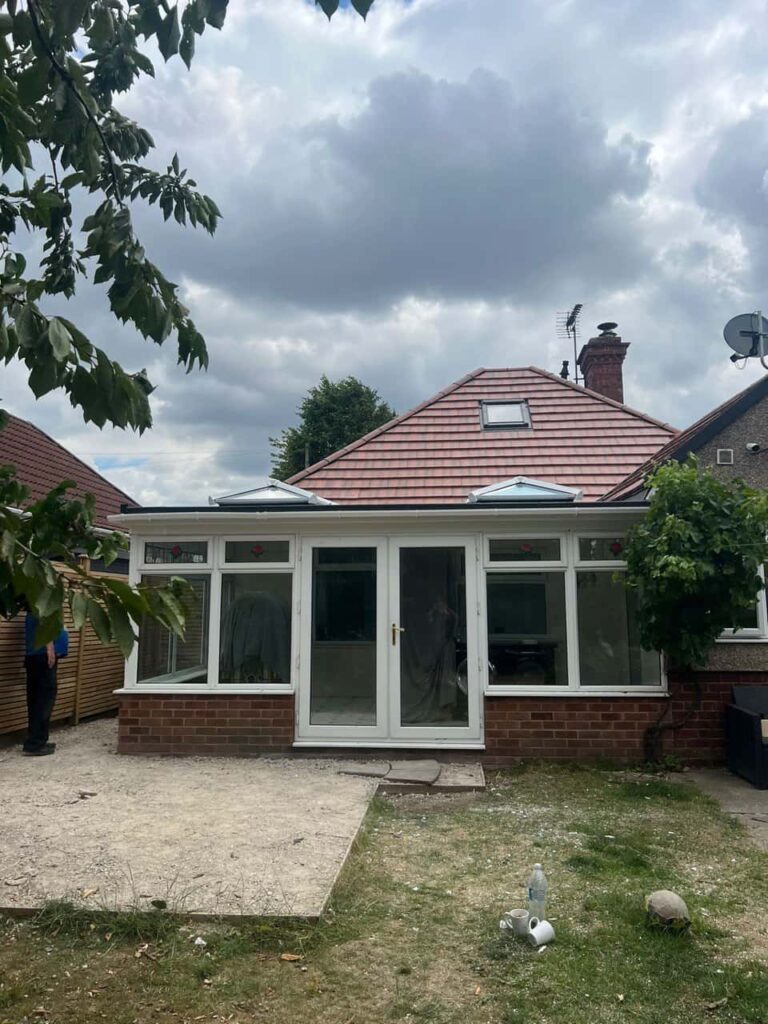
A leaking roof is one of those property problems that can appear straightforward but often requires careful investigation. A damp patch on a ceiling may suggest that water is entering directly above it, yet the actual point of entry can be somewhere else entirely. Water can travel beneath roof coverings, along structural components and through small gaps before finally becoming visible inside the property.
For homeowners in Priory Vale, Wiltshire, this is why effective roof leak repairs should begin with identifying the source rather than simply treating the most obvious symptom. Repairing the wrong area may leave the original defect untouched, allowing water ingress to continue.
At LJ Roofing Priory Vale, a considered approach to roof repairs focuses on understanding how and where water is entering before determining what work is required.
Why Can Roof Leaks Be Difficult to Locate?
Rainwater does not always travel vertically from the roof covering to the ceiling below.
Once water passes through a vulnerable point, it can follow the path of least resistance. It may travel along roofing materials or structural components before reaching an area where it can drip or accumulate.
As a result, the internal signs of a leak may be some distance from the actual roof defect.
This is particularly important when investigating leaks because concentrating only on the damp area indoors can lead attention towards the wrong section of the roof.
The Visible Damp Patch Is a Clue, Not Necessarily the Source
A water stain on a ceiling provides useful information, but it should usually be treated as part of the investigation rather than definitive proof of where the roof has failed.
The source may be associated with:
- A damaged or displaced roof tile
- Deteriorated flashing
- A vulnerable roof junction
- Defects around a chimney
- Problems around roof penetrations
- Deterioration affecting a flat roof
- Damage around ridges or verges
- A weakness within an earlier repair
The surrounding roof therefore needs to be assessed carefully before deciding where remedial work should take place.
Why Accurate Leak Detection Matters
The purpose of a roof repair is not simply to stop the visible drip temporarily. It is to correct the defect that allows water to enter the roof in the first place.
Accurate diagnosis matters because it helps ensure that attention is directed towards the right area.
When the source is correctly identified, repairs can be targeted appropriately. When it is misidentified, work may improve one section of the roof while leaving the original route of water ingress unchanged.
This can result in the leak returning during the next suitable period of rainfall.
Missing and Slipped Tiles Can Create Entry Points
Roof tiles form an important protective covering, directing rainfall away from the structure beneath.
A tile that has slipped, cracked or become damaged can compromise this protection.
However, even when a damaged tile appears to be the obvious explanation, the wider area should still be inspected. There may be additional movement nearby, deterioration beneath the covering or another defect contributing to the leak.
A professional roof inspection considers the condition of the surrounding area rather than assuming the first visible defect is automatically the only problem.
Flashing Is a Common Area to Investigate
Roof flashing helps protect vulnerable junctions where different surfaces meet.
These areas can include sections around chimneys, walls and other roof details.
If flashing becomes loose, damaged or deteriorated, small gaps can allow water to enter. Because these junctions are often positioned higher than the eventual internal damp patch, the connection between the two may not immediately be obvious.
Careful inspection of flashing is therefore an important part of tracing certain roof leaks.
Roof Junctions Require Particular Attention
Changes in roof direction and areas where different elements meet require careful detailing.
Water naturally travels across the roof towards drainage points, meaning these junctions can experience significant exposure during rainfall.
If deterioration develops, water may find its way beneath the roof covering.
A leak appearing near one part of a room may therefore originate from a junction further up the roof.
Understanding the roof’s layout and how water moves across it is essential when investigating the source.
Chimneys Can Complicate Leak Diagnosis
Where a property has a chimney, several different components may need to be considered when investigating nearby water ingress.
The problem might involve flashing, surrounding roof coverings or another adjoining detail.
Simply assuming that the chimney itself is responsible because dampness appears nearby can result in the wrong repair being carried out.
The complete junction between the chimney and roof should be inspected to establish where water is actually gaining access.
Flat Roof Leaks Can Also Travel
Flat roofs can sometimes make leak detection particularly challenging.
The point where moisture becomes visible internally does not always correspond directly with the external defect.
Water can move within or beneath roofing layers before appearing elsewhere.
An effective flat roof assessment therefore needs to consider the condition of the broader surface, including joints, edges, outlets and connections with adjoining structures.
The objective remains the same: identify the route of water ingress before deciding how the roof should be repaired.
Why Does a Roof Sometimes Leak Only During Certain Weather?
Some leaks are intermittent.
A property may remain completely dry during ordinary rainfall but develop water ingress when rain is accompanied by strong wind.
This can happen because wind-driven rain reaches parts of the roof differently from rainfall falling more vertically.
A leak that occurs only under particular conditions can provide valuable diagnostic information.
When arranging an inspection, explaining when the leak occurs can help the roofer understand which parts of the roof may require particular attention.
Useful observations can include whether the leak appears:
- During prolonged rainfall
- During heavy downpours
- When rain is accompanied by strong wind
- Shortly after rainfall begins
- Several hours after wet weather
- Only occasionally
These details can contribute to a more informed investigation.
Previous Repairs Can Sometimes Hide the Original Problem
A roof that has leaked before may already contain repaired areas.
If water ingress returns, it can be tempting to assume that the previous repair has failed. That may be the case, but it is not the only possibility.
Another nearby component could have deteriorated, or the original problem may have involved more than one defect.
This is why recurring leaks should be reassessed rather than automatically repeating the same work.
The current source needs to be identified based on the roof’s present condition.
Internal Inspection Can Provide Valuable Evidence
Roof leak diagnosis does not always begin and end with the external covering.
Where accessible, internal areas can provide useful evidence about how water is travelling.
Signs may include:
- Damp timbers
- Water staining
- Localised moisture
- Marks beneath particular roof junctions
- Signs of previous water movement
These observations can sometimes help narrow down the likely entry point when considered alongside the external roof inspection.
Why Quick Surface Patches Are Not Always the Answer
Applying material to the area that looks suspicious may seem like an easy solution, but roof leaks require more than guesswork.
If the true defect is elsewhere, a surface patch will not prevent water from continuing to enter.
There is also a risk of repeatedly adding repair materials without understanding what lies underneath them. Over time, this can make the roof more difficult to assess.
A targeted repair based on proper diagnosis is preferable to repeatedly treating different areas in the hope that one of them happens to contain the source.
Small Defects Can Allow Significant Water Ingress
A roof defect does not have to look dramatic to cause a noticeable leak.
Water only needs a suitable route through the protective covering.
A relatively small opening around a tile, joint or flashing detail can admit water during the right weather conditions. Once inside, that water may travel before becoming visible.
This is why the amount of internal staining does not necessarily indicate the physical size of the external defect.
A substantial damp patch can sometimes originate from a comparatively small weakness.
Recurring Leaks Deserve Further Investigation
If a leak has already received attention but continues returning, further investigation is important.
Recurring water ingress may indicate that:
- The original source was not correctly identified.
- More than one defect is present.
- Movement has affected the repaired area.
- Another nearby component has deteriorated.
- The problem extends beyond the previously repaired section.
Continually treating the same internal symptom will not resolve an external defect that remains active.
Early Attention Can Help Keep Repairs More Focused
A minor leak can be easy to postpone, particularly if it appears only during certain weather conditions.
However, continued water ingress can expose more of the roof construction to moisture.
Having the problem assessed while it remains relatively localised can make it easier to identify the affected area and determine an appropriate repair.
The aim is not to assume that every leak represents a major roofing problem. In many cases, the issue may be confined to a specific defect.
The important part is finding that defect accurately.
What Does a Professional Roof Leak Assessment Consider?
A professional investigation should look beyond the first obvious sign of damage.
Depending on the roof and the location of the leak, assessment may consider:
- The position of internal water staining
- The condition of tiles or other roof coverings
- Flashing and roof junctions
- Chimney details
- Ridges and verges
- Flat roof surfaces and edges
- Previous repairs
- The direction water could travel
- The weather conditions associated with the leak
- Accessible internal roof areas
Bringing these observations together provides a much stronger basis for deciding what repair is needed.
Why Targeted Roof Repairs Provide Better Value
Professional roof repair is valuable because it aims to solve the underlying problem rather than simply improve the appearance of a damaged area.
Where the defect is isolated, accurate diagnosis can allow the repair to remain focused on the affected section.
This avoids unnecessary work elsewhere while ensuring that the actual route of water ingress receives attention.
If the inspection identifies broader deterioration, that information also helps determine whether a more comprehensive roofing solution should be considered.
Either way, diagnosis comes before deciding on the repair.
Roof Leak Repairs in Priory Vale, Wiltshire
At LJ Roofing Priory Vale, we provide professional roofing and roof repair services throughout Priory Vale, Wiltshire.
When investigating a leaking roof, our focus is on identifying the likely source of water ingress and assessing the surrounding roofing components before determining the appropriate repair.
Whether the issue involves damaged roof coverings, flashing, roof junctions or another vulnerable area, understanding the cause allows the work to be properly targeted.
This considered approach helps provide a more dependable solution than simply treating the location where water happens to appear indoors.
Conclusion
Finding the exact source of a roof leak matters because the visible signs inside a property do not always correspond with the point where water is entering.
Rainwater can travel beneath roof coverings and along parts of the roof structure before appearing as a damp patch or drip somewhere else. As a result, effective roof leak repairs depend on careful investigation rather than assumptions based solely on the location of internal staining.
Damaged tiles, flashing, roof junctions, chimneys and other roofing details can all provide potential routes for water ingress. Identifying the actual defect allows repairs to be focused where they are genuinely required.
If you have noticed signs of a roof leak at your property in Priory Vale, Wiltshire, contact LJ Roofing Priory Vale. We can assess the affected roof, investigate the likely source of the water ingress and provide an appropriate repair designed to address the underlying problem.
Call us on: 01793 569 593
Click here to find out more about LJ Roofing Priory Vale
Click here to complete our contact form and see how we can help with your roofing needs.